Embarking on the journey of establishing a WordPress website can be both exciting and challenging. This guide, centered around how to setup wordpress site on google cloud, provides a detailed roadmap to successfully host your WordPress site on Google Cloud Platform (GCP). We’ll delve into the advantages of leveraging GCP’s robust infrastructure, from scalability and reliability to cost-effectiveness, making it an ideal choice for websites of all sizes.
Whether you’re a beginner or an experienced developer, this guide will equip you with the knowledge and steps necessary to create a high-performing, secure, and easily managed WordPress site.
This comprehensive walkthrough covers everything from setting up a Google Cloud account and selecting the right hosting solution to configuring your domain name, installing SSL certificates, and optimizing your site for peak performance. You’ll learn how to navigate the complexities of Compute Engine, database configuration, and WordPress setup, all while adhering to best practices for security and maintenance. By the end of this guide, you’ll be well-equipped to harness the power of Google Cloud to bring your WordPress vision to life.
Introduction: WordPress on Google Cloud
WordPress is a widely-used, open-source content management system (CMS) that allows users to create and manage websites or blogs. Google Cloud Platform (GCP) is a suite of cloud computing services offered by Google, providing infrastructure, platform, and serverless computing environments. Combining these two powerful tools offers a robust and scalable solution for website hosting.
Benefits of WordPress for Website Creation
WordPress offers a user-friendly interface, making it accessible even for individuals without extensive coding knowledge. Its flexibility and extensive ecosystem of themes and plugins cater to diverse website needs, from simple blogs to complex e-commerce platforms.
- Ease of Use: WordPress’s intuitive dashboard allows users to create and manage content easily. The visual editor simplifies the process of formatting text and adding media.
- Customization Options: The platform provides a vast library of themes to customize the website’s appearance and plugins to extend its functionality. This enables users to tailor their websites to their specific requirements.
- -Friendliness: WordPress is designed with search engine optimization () in mind. Its structure and features support practices that improve a website’s visibility in search engine results.
- Large Community and Support: A massive community of developers and users provides ample support, tutorials, and resources. This ensures assistance is readily available for any challenges that arise.
Google Cloud Platform Overview
Google Cloud Platform (GCP) offers a comprehensive set of cloud computing services. It provides a global network of data centers, ensuring high availability and low latency for applications. GCP services cover various aspects of cloud computing, including computing, storage, networking, and data analytics.
- Compute Engine: Provides virtual machines (VMs) for running applications. Users can choose from various machine types and operating systems to meet their performance and cost requirements.
- Cloud Storage: Offers scalable and durable object storage for storing data. It provides different storage classes, allowing users to optimize costs based on data access frequency.
- Cloud SQL: Provides managed database services for popular database engines like MySQL, PostgreSQL, and SQL Server. It simplifies database management tasks, such as backups and patching.
- Networking: Offers virtual private clouds (VPCs), load balancing, and content delivery network (CDN) services to ensure secure and performant network connectivity.
Advantages of Hosting WordPress on GCP
Hosting a WordPress site on GCP offers significant advantages in terms of scalability, reliability, and performance. The platform’s infrastructure allows websites to handle traffic spikes efficiently and ensures high availability.
- Scalability: GCP’s infrastructure allows for easy scaling of resources to meet fluctuating traffic demands. Users can adjust the number of virtual machines or storage capacity as needed.
- Reliability: GCP’s global network of data centers ensures high availability and redundancy. Data is replicated across multiple locations, minimizing the risk of data loss or downtime.
- Performance: GCP’s high-performance computing resources and global network deliver fast loading times for websites. Content delivery networks (CDNs) further optimize performance by caching content closer to users.
- Security: GCP provides robust security features, including encryption, firewalls, and identity and access management (IAM), to protect websites from threats.
Cost-Effectiveness of GCP for WordPress Hosting
GCP offers flexible pricing models that can be cost-effective compared to traditional hosting options. Users pay only for the resources they consume, allowing for efficient resource utilization.
- Pay-as-you-go pricing: GCP’s pay-as-you-go model allows users to pay only for the resources they use. This can result in significant cost savings compared to fixed-price hosting plans.
- Sustained use discounts: GCP offers discounts for sustained use of virtual machines and other resources. This further reduces costs for websites that consistently utilize resources.
- Resource optimization: GCP provides tools and services to optimize resource utilization. Users can identify and eliminate unused resources, further reducing costs.
Prerequisites
Before embarking on the setup of a WordPress site on Google Cloud, several essential prerequisites must be in place. These elements ensure a smooth and successful deployment, covering everything from account creation to domain configuration. Proper preparation significantly streamlines the entire process, minimizing potential issues and maximizing efficiency.
Google Cloud Account Creation
To utilize Google Cloud services, establishing a Google Cloud account is the initial step. This account provides access to the infrastructure needed to host and manage your WordPress site.Creating a Google Cloud account involves the following steps:
- Navigate to the Google Cloud Platform website.
- Click the “Get Started Free” button. This provides access to a free tier with limited resources.
- Sign in with a Google account or create a new one if you don’t already have one.
- Accept the terms of service and privacy policy.
- Provide your contact information and country of residence.
- Verify your identity through phone verification.
- Enter your billing information. Even if using the free tier, billing information is required for account verification and to access paid services if needed.
Setting Up Billing on Google Cloud
Establishing billing is a critical component of using Google Cloud services. This ensures that you can pay for the resources you consume.Setting up billing involves the following:
- Access the Google Cloud Console.
- Navigate to the “Billing” section, typically found in the navigation menu.
- Click “Manage billing accounts”.
- Select or create a billing account.
- Enter your payment information, such as a credit card or bank account details.
- Provide your billing address and contact information.
- Review and accept the terms of service.
- Verify your payment method, which may involve a small temporary charge.
Google Cloud offers various billing options, including pay-as-you-go pricing and sustained use discounts, depending on your resource usage. Carefully review the pricing structure to understand the costs associated with your chosen services.
Obtaining a Domain Name and Configuring DNS Settings
A domain name serves as the address for your website on the internet. Securing a domain name and configuring its DNS settings are crucial for making your WordPress site accessible to visitors.Obtaining a domain name involves the following:
- Choose a domain registrar. Popular registrars include Google Domains, GoDaddy, Namecheap, and others.
- Search for your desired domain name to check its availability.
- Select a domain name that aligns with your brand or website’s purpose.
- Register the domain name by providing the necessary contact information and payment details.
Configuring DNS settings involves:
- Accessing your domain registrar’s DNS management console.
- Locating the DNS records settings for your domain.
- Creating or modifying the following DNS records:
- A Record: This record maps your domain name to the public IP address of your Google Cloud instance. For example, if your WordPress site’s public IP address is 123.45.67.89, the A record for your domain (e.g., example.com) should point to that IP address.
- CNAME Record (Optional): This record can be used to create an alias for your domain. For instance, you can create a CNAME record for “www” (www.example.com) that points to your primary domain (example.com).
The time it takes for DNS changes to propagate across the internet can vary, often taking up to 48 hours. This is known as DNS propagation.
Recommended Software/Tools
Utilizing the appropriate software and tools significantly streamlines the process of setting up and managing a WordPress site on Google Cloud. These tools facilitate secure connections, file transfers, and web browsing.Recommended software/tools include:
- SSH Client: An SSH (Secure Shell) client is essential for securely connecting to your Google Cloud instance and executing commands. Popular SSH clients include PuTTY (Windows), Terminal (macOS), and the built-in SSH client in Linux.
- Web Browser: A modern web browser, such as Chrome, Firefox, Safari, or Edge, is necessary for accessing the WordPress dashboard, managing your site’s content, and browsing the internet.
- Text Editor: A text editor is helpful for editing configuration files and code. Options range from simple text editors like Notepad (Windows) to more advanced editors like Sublime Text, Visual Studio Code, or Atom.
- File Transfer Protocol (FTP) Client (Optional): An FTP client, such as FileZilla, can be used for transferring files between your local computer and your Google Cloud instance. While not always necessary, it can be useful for managing files.
Choosing a Hosting Solution on Google Cloud
Selecting the right hosting solution on Google Cloud is critical for the performance, scalability, and cost-effectiveness of your WordPress website. Google Cloud offers several options, each with its own strengths and weaknesses. This section will explore these options, guiding you through the decision-making process to ensure your WordPress site thrives.
Comparing Google Cloud Hosting Options for WordPress
Google Cloud provides several hosting options, each catering to different needs and technical expertise levels. Understanding these options is the first step in choosing the best fit for your WordPress website.
- Compute Engine: Compute Engine offers virtual machines (VMs) that you can fully customize. This provides complete control over the server environment, including operating system, software, and configurations.
- Google Kubernetes Engine (GKE): GKE is a managed Kubernetes service. It allows you to deploy and manage containerized applications, offering high scalability and automation capabilities.
- Cloud Run: Cloud Run is a serverless platform that runs stateless containers. It automatically scales your application based on traffic, providing a cost-effective solution for websites with fluctuating traffic demands.
Pros and Cons of Each Hosting Solution
Each Google Cloud hosting solution has advantages and disadvantages that must be considered in relation to your website’s specific requirements. A careful evaluation will help you make an informed decision.
- Compute Engine:
- Pros: Complete control over the server environment, suitable for complex configurations, and offers a wide range of instance types to optimize performance.
- Cons: Requires more technical expertise for setup and management, you are responsible for patching, and security updates, and may require more manual scaling.
- Google Kubernetes Engine (GKE):
- Pros: Highly scalable, automated deployment and management, ideal for websites with significant traffic fluctuations, and allows for easy updates and rollbacks.
- Cons: Steeper learning curve compared to Compute Engine, requires familiarity with Kubernetes concepts, and can be more complex to set up initially.
- Cloud Run:
- Pros: Serverless, automatically scales, pay-per-use pricing model, and easy deployment from containers.
- Cons: Limited customization options compared to Compute Engine, may not be suitable for resource-intensive WordPress sites, and requires containerization of the application.
Selecting the Best Option Based on Website Needs and Budget
Choosing the optimal hosting solution involves balancing website requirements with budgetary constraints. This section guides you through the selection process, helping you make a well-informed decision.
- Small Websites and Blogs: For websites with moderate traffic and simple requirements, Cloud Run can be a cost-effective solution due to its pay-per-use pricing. Alternatively, a small Compute Engine instance can provide sufficient performance with more control.
- Medium-Traffic Websites: Compute Engine offers a good balance of control and performance. Consider GKE if scalability and automated management are essential.
- High-Traffic Websites and E-commerce Sites: GKE is well-suited for high-traffic sites due to its scalability and resilience. Compute Engine with optimized configurations can also handle high traffic.
- Budget Considerations: Cloud Run is generally the most cost-effective for sites with fluctuating traffic. Compute Engine allows you to choose instance types to optimize cost. GKE can be cost-effective when properly configured and managed, but requires more expertise.
Estimating Required Resources (CPU, RAM, Storage)
Proper resource allocation is crucial for optimal website performance. This section explains how to estimate the necessary CPU, RAM, and storage based on your website’s needs.
- CPU: Consider the number of visitors, the complexity of the website (e.g., plugins used), and the type of content (e.g., images, videos). A simple blog might start with 1-2 vCPUs, while a more complex site could require 4 or more.
- RAM: WordPress websites often benefit from more RAM. Start with at least 2GB for a small site and increase as needed. E-commerce sites and those with many plugins may need 4GB or more.
- Storage: The storage needs depend on the size of your website’s content, including images, videos, and database size. Start with a minimum of 20GB of SSD storage and increase as needed.
- Monitoring and Optimization: Regularly monitor your website’s resource usage using Google Cloud’s monitoring tools. Adjust resource allocation as needed to optimize performance and cost.
Importance of Choosing the Correct Instance Type and its Impact on Performance
Selecting the correct instance type significantly impacts your website’s performance and cost. Understanding the different instance types and their capabilities is crucial.
- Compute Engine Instance Types: Google Cloud offers various instance types, including general-purpose (e.g., N1, N2), compute-optimized (e.g., C2), memory-optimized (e.g., M1, M2), and others.
- General-Purpose Instances: Suitable for a wide range of workloads, including WordPress websites.
- Compute-Optimized Instances: Designed for CPU-intensive tasks, such as serving complex content.
- Memory-Optimized Instances: Ideal for websites that require a lot of RAM, such as those with large databases or complex caching.
- Example: A website with a large image gallery and heavy traffic might benefit from a compute-optimized instance with sufficient RAM. Conversely, a simple blog might perform well on a general-purpose instance with fewer resources.
- Impact on Performance: Choosing the right instance type can dramatically improve website loading times, responsiveness, and overall user experience. Selecting an underpowered instance can lead to slow performance and a poor user experience.
Setting up a Compute Engine Instance
Setting up a Compute Engine instance is a crucial step in hosting your WordPress site on Google Cloud. This involves creating a virtual machine (VM) where your website files, database, and web server will reside. This section details the process, from instance creation to initial security measures, ensuring a solid foundation for your WordPress site.
Creating a Compute Engine Instance on GCP
The process of creating a Compute Engine instance on Google Cloud Platform involves several steps, accessible through the Google Cloud Console. The following provides a comprehensive guide to instance creation.
- Access the Compute Engine Section: Navigate to the Google Cloud Console and select “Compute Engine” from the navigation menu. If this is your first time, you might be prompted to enable the Compute Engine API.
- Create a New Instance: Click the “Create Instance” button. This action will bring you to the instance creation form, where you’ll configure the instance’s specifications.
- Configure Instance Details:
- Name: Provide a descriptive name for your instance, for example, “wordpress-instance.”
- Region and Zone: Choose a region and zone that is geographically close to your target audience for optimal performance. Consider factors like latency and available resources in each zone.
- Machine Configuration: Select the machine type. For a basic WordPress site, a “micro” or “n1-standard-1” machine type might suffice. However, as your site grows, you may need to upgrade to a more powerful machine type (e.g., n1-standard-2 or higher).
- Boot Disk Configuration:
- Operating System: Select the operating system.
- Boot Disk Type: Choose between standard persistent disk and SSD persistent disk. SSDs offer faster performance.
- Boot Disk Size: Determine the size of the boot disk, considering the operating system, WordPress files, and database storage requirements. A minimum of 20GB is usually recommended, and you can always increase it later.
- Firewall Configuration:
- Allow HTTP and HTTPS Traffic: Check the boxes to allow HTTP and HTTPS traffic to ensure your website is accessible.
- Other Firewall Rules: Configure additional firewall rules as needed (e.g., for SSH access).
- Networking, Disks, Security, Management: Configure the other settings such as the network, and access to services.
- Review and Create: Review all your settings and click the “Create” button to launch your instance.
Selecting an Appropriate Operating System
Choosing the right operating system is a critical decision for your WordPress setup. The choice impacts security, performance, and ease of management. Several operating systems are suitable for hosting WordPress.
Consider the following points when selecting an operating system:
- Debian: Debian is a stable and secure Linux distribution. It is known for its extensive software repository and excellent community support. Debian is often a good choice for beginners due to its ease of use and detailed documentation.
- Ubuntu: Ubuntu is another popular Linux distribution derived from Debian. It offers a user-friendly interface and a large community. Ubuntu is frequently updated and provides a good balance between stability and access to the latest software versions.
- CentOS/Rocky Linux: CentOS and Rocky Linux are community-supported distributions based on Red Hat Enterprise Linux (RHEL). They offer a high degree of stability and are well-suited for production environments. These distributions provide long-term support (LTS) releases, making them a reliable choice.
For most users, Ubuntu or Debian are excellent choices. They offer a good balance of features, ease of use, and community support. CentOS/Rocky Linux are suitable for those prioritizing stability and long-term support.
Configuring Network Settings
Configuring network settings, including firewall rules and IP addresses, is essential for securing and making your WordPress site accessible.
The following explains the process of configuring the network settings:
- Firewall Rules: Firewall rules control network traffic to and from your Compute Engine instance.
- Creating Firewall Rules: You can create firewall rules in the Google Cloud Console under “VPC network” > “Firewall.”
- Allowing HTTP and HTTPS Traffic: Create firewall rules to allow incoming traffic on ports 80 (HTTP) and 443 (HTTPS). This enables users to access your website. You can specify source IP ranges (e.g., “0.0.0.0/0” for all traffic) or restrict access based on IP addresses.
- Allowing SSH Traffic: Create a firewall rule to allow SSH traffic (port 22) for secure access to your instance. Restrict the source IP range to your own IP address for enhanced security.
- IP Addresses:
- External IP Address: When you create your instance, it will be assigned an external IP address. This address is used to access your website from the internet. You can either use an ephemeral (temporary) external IP address or reserve a static external IP address. Reserving a static IP address is recommended, as it ensures that your website always has the same IP address.
- Internal IP Address: Your instance will also have an internal IP address for communication within the Google Cloud network.
- Network Tags:
- Using Network Tags: Network tags can be applied to your Compute Engine instance to simplify firewall rule management. For example, you can create a tag like “webserver” and then create firewall rules that apply to instances with this tag.
Installing and Configuring a Web Server
Installing and configuring a web server is essential for serving your WordPress website files. Both Apache and Nginx are popular choices.
The following explains the installation and configuration of a web server:
- Apache Web Server:
- Installation: Update the package lists and install Apache. For Debian/Ubuntu, you would typically use the following commands:
sudo apt update
sudo apt install apache2 - Configuration:
- Virtual Host Configuration: Configure a virtual host for your WordPress site. This involves creating a configuration file in the Apache configuration directory (e.g., /etc/apache2/sites-available/) that specifies the domain name, document root (where your WordPress files are located), and other settings.
- Enabling the Virtual Host: Enable the virtual host using the command:
sudo a2ensite your-domain.com.conf - Restarting Apache: Restart Apache to apply the changes:
sudo systemctl restart apache2
- Installation: Update the package lists and install Apache. For Debian/Ubuntu, you would typically use the following commands:
- Nginx Web Server:
- Installation: Install Nginx using the package manager. For Debian/Ubuntu:
sudo apt update
sudo apt install nginx - Configuration:
- Server Block Configuration: Create a server block configuration file in the Nginx configuration directory (e.g., /etc/nginx/sites-available/) to specify the domain name, document root, and other settings.
- Creating a Symbolic Link: Create a symbolic link to the configuration file in the sites-enabled directory:
sudo ln -s /etc/nginx/sites-available/your-domain.com.conf /etc/nginx/sites-enabled/ - Testing and Reloading Nginx: Test your Nginx configuration for errors using:
sudo nginx -tIf no errors are found, reload Nginx to apply the changes:
sudo systemctl reload nginx
- Document Root: The document root is the directory where your WordPress files will be stored. It is typically set to /var/www/html/ for Apache and /usr/share/nginx/html/ or /var/www/your-domain.com/ for Nginx.
Securing the Compute Engine Instance
Securing your Compute Engine instance is crucial for protecting your WordPress site from threats.
The following points describe the steps to secure your Compute Engine instance:
- Update the Operating System: Regularly update your operating system to patch security vulnerabilities.
sudo apt update && sudo apt upgrade(Debian/Ubuntu) - Firewall Configuration: Configure the firewall to allow only necessary traffic. Limit access to SSH (port 22) to your IP address. Allow HTTP (port 80) and HTTPS (port 443) traffic.
- SSH Key Authentication: Disable password-based SSH authentication and use SSH key authentication. This enhances security by preventing brute-force attacks.
- User Management: Create a dedicated user account for managing your WordPress site. Avoid using the “root” account directly.
- Install and Configure a Web Application Firewall (WAF): A WAF can help protect your site from common web attacks.
- ModSecurity with Apache: If using Apache, you can install ModSecurity, a popular open-source WAF.
- Nginx with a WAF Module: For Nginx, you can use a WAF module like the Nginx ModSecurity module or integrate with a cloud-based WAF service.
- Regular Backups: Implement a backup strategy to regularly back up your WordPress files and database. This allows you to restore your site in case of data loss or corruption.
- Enable HTTPS: Install an SSL/TLS certificate to encrypt traffic between your website and users. This protects sensitive data and improves search engine rankings.
- Monitor Your Instance: Use Google Cloud’s monitoring tools to monitor your instance’s performance, resource usage, and security events.
Installing and Configuring WordPress
Now that your Compute Engine instance is running, the next crucial step is to install and configure WordPress. This involves downloading the WordPress files, setting up a database, and configuring the necessary files to make your website functional. This section provides a detailed walkthrough of the entire process.
Methods for Installing WordPress
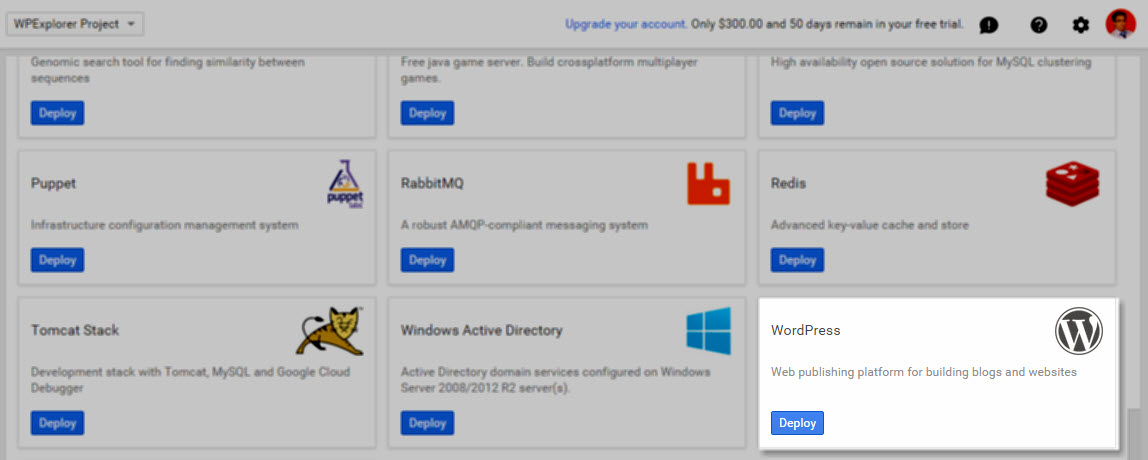
Several methods exist for installing WordPress on your chosen web server, which in this case is a Compute Engine instance on Google Cloud. The most common approaches are manual installation, using a command-line interface (CLI) like SSH, or leveraging automated tools or pre-configured images provided by Google Cloud Marketplace. The choice depends on your technical proficiency and preferences.
Downloading and Setting Up WordPress Files
The initial step is to obtain the WordPress files and place them in the appropriate directory on your web server. This is typically the `public_html` or `www` directory, depending on your web server configuration.
- Download the WordPress Package: The latest version of WordPress can be downloaded from the official WordPress website, specifically at wordpress.org. Navigate to the download section to get the current stable release.
- Access the Server via SSH: Use SSH to connect to your Compute Engine instance. You can use the SSH button in the Google Cloud Console or a terminal application like PuTTY (for Windows). Ensure you are logged in as a user with sufficient privileges to modify the web server’s files.
- Navigate to the Web Root Directory: Use the `cd` command in your terminal to navigate to the web root directory. This directory is usually located at `/var/www/html/` for Apache web servers or `/usr/share/nginx/html/` for Nginx web servers, depending on your chosen web server.
- Download the WordPress Package to the Server: Use the `wget` command followed by the direct link to the WordPress download from wordpress.org to download the WordPress package directly to your server. For example:
wget https://wordpress.org/latest.tar.gz - Extract the WordPress Files: Once the download is complete, extract the contents of the downloaded archive using the `tar` command. For example:
tar -xzvf latest.tar.gzThis will create a new directory named `wordpress` within your web root.
- Move the WordPress Files: Move all the files from the newly created `wordpress` directory into your web root directory. You can use the `mv` command for this. For example:
mv wordpress/* .
rm -r wordpressThe first command moves all the files and folders inside the wordpress folder to the current directory, and the second command removes the now empty wordpress folder.
- Set File Permissions: Adjust the file permissions to ensure the web server can access and write to the necessary files. The specific commands will vary depending on your web server and user setup. Generally, you will need to assign ownership of the files to the web server user (e.g., `www-data` for Apache). For example:
sudo chown -R www-data:www-data -
sudo find . -type d -exec chmod 755 \;
sudo find . -type f -exec chmod 644 \;These commands change the owner and group to `www-data`, set directory permissions to 755, and file permissions to 644. Adjust the user and group as needed based on your server configuration.
Creating a MySQL Database for WordPress
WordPress requires a database to store its content and settings. You will need to create a MySQL database and a user with the appropriate permissions to access it. This is usually done using the MySQL command-line client or a tool like phpMyAdmin.
- Connect to the MySQL Server: Use the MySQL command-line client to connect to your MySQL server. You will need the MySQL root password.
mysql -u root -p - Create the Database: Create a new database for your WordPress installation. Choose a descriptive name for your database. For example:
CREATE DATABASE wordpress_db; - Create a Database User: Create a new MySQL user specifically for WordPress and assign a strong password.
CREATE USER 'wordpress_user'@'localhost' IDENTIFIED BY 'your_strong_password'; - Grant Permissions to the User: Grant the newly created user all necessary permissions on the WordPress database.
GRANT ALL PRIVILEGES ON wordpress_db.* TO 'wordpress_user'@'localhost'; - Flush Privileges: Reload the grant tables to ensure the new permissions take effect.
FLUSH PRIVILEGES; - Exit the MySQL Client: Type `exit` or `quit` to exit the MySQL client.
Configuring the WordPress `wp-config.php` File
The `wp-config.php` file contains essential configuration settings for your WordPress site, including database connection details. This file needs to be created and configured correctly for WordPress to function.
- Locate the `wp-config-sample.php` file: This file is located in your web root directory (e.g., `/var/www/html/`).
- Create a `wp-config.php` file: Copy the `wp-config-sample.php` file and rename the copy to `wp-config.php`. You can use the `cp` command:
cp wp-config-sample.php wp-config.php - Edit the `wp-config.php` file: Open the `wp-config.php` file in a text editor (e.g., `nano` or `vi`) using SSH.
nano wp-config.phpEdit the following lines with the database details you created earlier:
define( 'DB_NAME', 'wordpress_db' );(Replace ‘wordpress_db’ with your database name.)define( 'DB_USER', 'wordpress_user' );(Replace ‘wordpress_user’ with your database username.)define( 'DB_PASSWORD', 'your_strong_password' );(Replace ‘your_strong_password’ with your database password.)define( 'DB_HOST', 'localhost' );(Typically, ‘localhost’ is correct if the database and web server are on the same machine.)
Also, generate and add unique authentication keys and salts. You can obtain these from the WordPress API. For example:
define( 'AUTH_KEY', 'put your unique phrase here' );
define( 'SECURE_AUTH_KEY', 'put your unique phrase here' );
define( 'LOGGED_IN_KEY', 'put your unique phrase here' );
define( 'NONCE_KEY', 'put your unique phrase here' );
define( 'AUTH_SALT', 'put your unique phrase here' );
define( 'SECURE_AUTH_SALT', 'put your unique phrase here' );
define( 'LOGGED_IN_SALT', 'put your unique phrase here' );
define( 'NONCE_SALT', 'put your unique phrase here' );You can generate these keys and salts using the WordPress.org API: `https://api.wordpress.org/secret-key/1.1/salt/`. Copy and paste the generated values into your `wp-config.php` file.
- Save the `wp-config.php` file: Save the changes you made to the file. In `nano`, press `Ctrl + X`, then `Y`, and then `Enter`.
Accessing the WordPress Admin Dashboard
Once you have completed the installation and configuration, you can access the WordPress admin dashboard through your web browser to finalize the setup.
- Open a Web Browser: Open your preferred web browser.
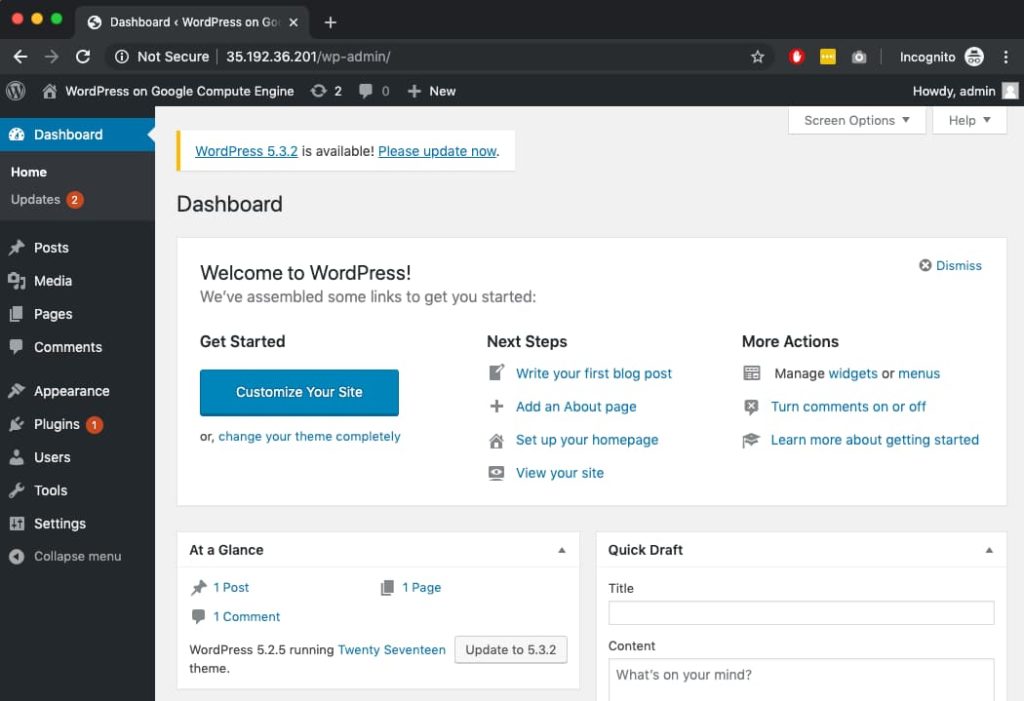
- Enter Your Website’s Address: Enter the public IP address or domain name of your Compute Engine instance, followed by `/wp-admin/`. For example: `http://your_public_ip_address/wp-admin/` or `http://yourdomain.com/wp-admin/`.
- Complete the WordPress Installation: You will be prompted to complete the WordPress installation by providing information such as your site title, username, password, and email address.
- Log in to the Dashboard: After completing the initial setup, use the username and password you created to log in to the WordPress admin dashboard.
- Start Customizing Your Site: Once logged in, you can start customizing your website by installing themes, plugins, and creating content.
Configuring Database and Connecting WordPress
Setting up a robust database is crucial for the functionality and security of your WordPress site. This section details the necessary steps to create a MySQL database, configure user access, import the WordPress database schema, and establish a secure connection between your WordPress installation and the database. Following these steps ensures your site can store and retrieve data effectively.
Creating a MySQL Database and User
Before installing WordPress, you must set up a dedicated database and user within your Google Cloud environment. This involves creating the database itself and a user account with the appropriate privileges to access and manage it.To create a MySQL database and user:
- Connect to your Compute Engine Instance: Access your Compute Engine instance via SSH using the Google Cloud Console or a terminal.
- Log in to MySQL: Use the MySQL command-line client to connect to the MySQL server. The default command is usually
`mysql -u root -p`
. You will be prompted for the root password, which you set during the MySQL installation.
- Create the Database: Execute the following SQL command to create a new database for WordPress. Replace `wordpress_db` with your preferred database name.
- Create a Database User: Create a new MySQL user specifically for WordPress. Replace `wordpress_user` with your desired username and `password` with a strong, unique password.
- Grant Privileges: Grant the newly created user all necessary privileges to access and modify the WordPress database. This allows WordPress to create tables, insert data, and manage the database.
- Flush Privileges: Apply the changes to the MySQL server.
- Exit MySQL: Type `exit;` to exit the MySQL command-line client.
`CREATE DATABASE wordpress_db;`
`CREATE USER ‘wordpress_user’@’localhost’ IDENTIFIED BY ‘password’;`
`GRANT ALL PRIVILEGES ON wordpress_db.* TO ‘wordpress_user’@’localhost’;`
`FLUSH PRIVILEGES;`
Importing the WordPress Database Schema
After creating the database and user, the next step is to import the WordPress database schema. This schema defines the structure of the tables used to store your site’s content, settings, and user data.To import the WordPress database schema:
- Locate the WordPress Database Schema File: The database schema is usually included in the WordPress installation package. It is typically found in the root directory of your WordPress installation. The file name is often `wp-config-sample.php`.
- Upload the WordPress Files: If you haven’t already, upload the WordPress installation files to your Compute Engine instance’s web server directory (e.g., `/var/www/html/`). You can use tools like `scp` or an SFTP client to transfer the files.
- Edit the `wp-config.php` File: Navigate to your WordPress installation directory and locate the `wp-config-sample.php` file. Rename this file to `wp-config.php`. Open the file in a text editor.
- Configure Database Settings: Within the `wp-config.php` file, locate the database settings and modify them to match your MySQL database configuration. Replace the placeholder values with the database name, username, and password you created earlier.
- Save the `wp-config.php` File: Save the changes to the `wp-config.php` file.
`define( ‘DB_NAME’, ‘wordpress_db’ );`
`define( ‘DB_USER’, ‘wordpress_user’ );`
`define( ‘DB_PASSWORD’, ‘password’ );`
`define( ‘DB_HOST’, ‘localhost’ );`Connecting WordPress to the Database
The `wp-config.php` file plays a crucial role in connecting WordPress to the database. It contains the necessary information for WordPress to authenticate and interact with the MySQL database.To connect WordPress to the database:
- Verify the `wp-config.php` Configuration: Double-check that the database name, username, password, and host settings in your `wp-config.php` file are accurate and match the credentials you established for the MySQL database.
- Access Your WordPress Site: Open your web browser and navigate to the URL of your WordPress site (e.g., `http://your-domain.com` or `http://your-instance-ip`).
- Follow the WordPress Installation Process: If WordPress is not yet installed, you will be prompted to complete the installation process. This involves providing site details such as the site title, username, and password for the WordPress administrator account.
- Complete the Installation: After providing the necessary information, WordPress will attempt to connect to the database using the settings in `wp-config.php`. If the connection is successful, the installation will proceed, and you will be able to log in to your WordPress dashboard.
Testing the Database Connection
Testing the database connection is a critical step to ensure your WordPress site can successfully communicate with the MySQL database. It helps identify any issues with the database configuration before proceeding further.To test the database connection:
- Attempt to Log in to the WordPress Dashboard: After completing the WordPress installation, try to log in to your WordPress dashboard using the administrator credentials you set up during the installation process.
- Check for Error Messages: If you encounter any errors during the login process, such as “Error establishing a database connection,” it indicates a problem with the database configuration.
- Review the `wp-config.php` File: Carefully review the settings in your `wp-config.php` file, ensuring that the database name, username, password, and host are correct.
- Verify MySQL Server Status: Check the status of your MySQL server to ensure it is running and accessible. You can use the command `sudo systemctl status mysql` in your terminal to check the service status.
- Check MySQL Server Access: Verify that your WordPress installation can access the MySQL server. If your MySQL server is running on a different instance, ensure that the firewall rules allow traffic on port 3306 (the default MySQL port) from the IP address of your WordPress instance.
- Troubleshoot Connection Issues: If you are still experiencing connection problems, consult the WordPress documentation or search online for troubleshooting tips related to database connection errors.
Best Practices for Database Security
Implementing robust security measures for your WordPress database is essential to protect your site from unauthorized access, data breaches, and other security threats.To enhance database security:
- Use Strong Passwords: Always use strong, unique passwords for your MySQL database user and the WordPress administrator account. Passwords should be at least 12 characters long and include a combination of uppercase and lowercase letters, numbers, and symbols.
- Limit User Privileges: Grant your WordPress database user only the necessary privileges. Avoid granting excessive privileges, such as the `SUPER` privilege, unless absolutely required.
- Change the Default Database Prefix: By default, WordPress uses the prefix `wp_` for its database tables. Changing this prefix to a unique value can make it more difficult for attackers to target your database. You can change the prefix in your `wp-config.php` file.
- Regularly Update WordPress and Plugins: Keep your WordPress core, themes, and plugins updated to the latest versions. Updates often include security patches that address known vulnerabilities.
- Use a Web Application Firewall (WAF): Implement a WAF to protect your WordPress site from common attacks, such as SQL injection and cross-site scripting (XSS). Google Cloud offers WAF services that can be integrated with your Compute Engine instance.
- Back Up Your Database Regularly: Regularly back up your WordPress database to protect against data loss. You can use plugins like UpdraftPlus or manually create database backups using tools like `mysqldump`.
- Monitor Database Activity: Monitor your database activity for suspicious behavior. This can help you detect and respond to potential security threats. Consider using a security plugin or service that provides database activity monitoring.
- Enable Two-Factor Authentication (2FA): Enable two-factor authentication for your WordPress administrator account to add an extra layer of security. This makes it more difficult for attackers to gain unauthorized access, even if they have your password.
Configuring Domain Name and SSL Certificate

Securing your WordPress site and making it accessible via a user-friendly domain name are crucial steps after setting up your instance on Google Cloud. This involves pointing your domain to your server’s IP address and installing an SSL certificate to enable HTTPS. These configurations enhance both the user experience and the security of your website.
Pointing the Domain Name to the Google Cloud Instance’s IP Address
Configuring your domain name to point to your Google Cloud instance involves updating the DNS records associated with your domain. This process ensures that when someone types your domain name into their browser, they are directed to your WordPress site hosted on Google Cloud.To accomplish this, follow these steps:
- Identify your Google Cloud Instance’s External IP Address: Locate the external IP address of your Compute Engine instance within the Google Cloud Console. This IP address is the public IP address that your domain will point to.
- Access Your Domain Registrar’s DNS Management Panel: Log in to the account where your domain name is registered (e.g., GoDaddy, Namecheap, Google Domains). Locate the DNS management or settings section.
- Create or Modify an A Record: In the DNS settings, you will need to create or modify an “A” record.
- The “Host” or “Name” field should typically be “@” (representing your root domain, such as “yourdomain.com”) or “www” (for the “www.yourdomain.com” subdomain).
- The “Value” or “Points to” field should contain the external IP address of your Google Cloud instance.
- The “TTL” (Time To Live) value specifies how long DNS resolvers should cache the record. A common value is 3600 seconds (1 hour).
- Save the Changes: Save the DNS record changes within your domain registrar’s interface.
- Wait for DNS Propagation: DNS changes can take some time to propagate across the internet. This propagation period, known as “DNS propagation,” can vary but usually takes between a few minutes and 48 hours. During this time, your website might be accessible at the old IP address or the new one. You can check the propagation status using online DNS lookup tools.
Obtaining and Installing an SSL Certificate (e.g., Let’s Encrypt) for HTTPS
Securing your website with an SSL certificate is essential for encrypting the data transmitted between your website and visitors’ browsers, ensuring data privacy and building trust. Let’s Encrypt is a free, automated, and open certificate authority that provides SSL certificates.To obtain and install an SSL certificate using Let’s Encrypt, consider the following:
- Install Certbot: Certbot is a command-line tool that automates the process of obtaining and installing Let’s Encrypt certificates. You will need to install it on your Compute Engine instance. The installation method varies depending on your operating system (e.g., Debian/Ubuntu, CentOS/RHEL). Consult the Certbot documentation for specific instructions.
- Obtain the SSL Certificate: Use Certbot to obtain a certificate for your domain. For example, if you are using Apache as your web server, the command would be:
sudo certbot --apache -d yourdomain.com -d www.yourdomain.comThis command will automatically:
- Verify your domain ownership (usually by placing a file on your web server).
- Obtain the SSL certificate from Let’s Encrypt.
- Install the certificate and configure your Apache web server to use it.
- Verify Certificate Installation: After the installation, Certbot will typically provide confirmation messages, and your web server configuration files (e.g., Apache’s virtual host files) will be updated. You can also verify the installation by visiting your website using HTTPS (e.g., `https://yourdomain.com`) in a web browser. A padlock icon in the address bar indicates a successful SSL installation.
- Automate Certificate Renewal: Let’s Encrypt certificates are valid for 90 days. Certbot automates the renewal process. Configure a cron job to automatically renew your certificate before it expires. Certbot typically sets up a cron job during installation.
Configuring the Web Server to Use the SSL Certificate
After obtaining the SSL certificate, the web server (e.g., Apache or Nginx) must be configured to use it. This involves updating the web server’s configuration files to point to the certificate and private key files. The exact steps depend on the web server you are using.Here’s a general Artikel for Apache:
- Locate the Virtual Host Configuration File: The virtual host configuration file contains the settings for your website. It is usually located in `/etc/apache2/sites-available/` (Debian/Ubuntu) or `/etc/httpd/conf.d/` (CentOS/RHEL). The file name will likely be related to your domain name (e.g., `yourdomain.com.conf`).
- Enable SSL in the Virtual Host Configuration: Inside the virtual host configuration file, you’ll need to enable SSL by:
- Ensuring the virtual host listens on port 443 (the standard port for HTTPS).
- Specifying the paths to your SSL certificate and private key files. Certbot usually places these files in `/etc/letsencrypt/live/yourdomain.com/`. The configuration will typically include directives like:
SSLEngine on
SSLCertificateFile /etc/letsencrypt/live/yourdomain.com/fullchain.pem
SSLCertificateKeyFile /etc/letsencrypt/live/yourdomain.com/privkey.pem
- Enable the Virtual Host and Restart Apache: After making changes, enable the updated virtual host using `sudo a2ensite yourdomain.com.conf` (Debian/Ubuntu) or the equivalent command for your distribution, and restart the Apache service using `sudo systemctl restart apache2` (Debian/Ubuntu) or `sudo systemctl restart httpd` (CentOS/RHEL).
Redirecting HTTP Traffic to HTTPS
Redirecting HTTP traffic to HTTPS ensures that all website visitors are automatically using the secure HTTPS connection. This is important for security and .Here’s how to configure a redirect using Apache:
- Edit the .htaccess File: The `.htaccess` file is a configuration file that controls the behavior of your Apache web server. It is usually located in the root directory of your WordPress installation (e.g., `/var/www/html/`). If the file does not exist, you can create it.
- Add the Redirect Rule: Add the following code to your `.htaccess` file:
RewriteEngine OnRewriteCond %HTTPS offRewriteRule ^(.*)$ https://%HTTP_HOST%REQUEST_URI [L,R=301]This code does the following:
- `RewriteEngine On`: Enables the rewrite engine.
- `RewriteCond %HTTPS off`: Checks if HTTPS is off.
- `RewriteRule ^(.*)$ https://%HTTP_HOST%REQUEST_URI [L,R=301]`: Redirects all HTTP traffic (port 80) to HTTPS (port 443) using a 301 (permanent) redirect.
- Test the Redirect: After saving the `.htaccess` file, test the redirect by entering your website’s HTTP address (e.g., `http://yourdomain.com`) in your browser. You should be automatically redirected to the HTTPS version of your website (e.g., `https://yourdomain.com`).
Verifying the SSL Certificate Installation
After configuring the SSL certificate and the web server, verifying the installation is crucial to ensure that HTTPS is working correctly. This can be done in several ways:
- Check the Browser Address Bar: The easiest way to verify is to check the browser’s address bar. A padlock icon next to your website’s address indicates a secure connection. Clicking on the padlock icon will usually display information about the certificate, such as the issuer and expiration date.
- Use Online SSL Checkers: Several online tools allow you to check your SSL certificate installation. These tools analyze your website’s SSL configuration and provide detailed information about the certificate, including its validity, expiration date, and any potential issues. Examples include SSL Labs’ SSL Server Test and Qualys SSL Labs.
- Inspect the Certificate Details: In your browser, you can inspect the certificate details. This information includes the certificate’s issuer, the domain it’s issued for, and the expiration date.
- Test the Redirect: Ensure that HTTP traffic is correctly redirected to HTTPS. Type your website’s HTTP address in the browser, and verify that it automatically redirects to the HTTPS version.
Optimizing WordPress Performance on Google Cloud
Optimizing your WordPress site on Google Cloud is crucial for providing a fast and engaging user experience. A well-optimized site not only improves user satisfaction but also positively impacts search engine rankings and reduces server resource consumption, leading to cost savings. This section details several key optimization techniques to help you maximize your WordPress site’s performance on Google Cloud.
Methods to Optimize WordPress Performance
Several strategies can significantly improve WordPress performance. These methods work synergistically to reduce page load times and enhance the overall user experience.
- Caching: Implementing caching mechanisms stores static versions of your web pages, reducing the load on your server and allowing for faster content delivery to users.
- Content Delivery Network (CDN): Utilizing a CDN distributes your website’s content across multiple servers geographically closer to your users. This reduces latency and improves loading times, especially for users far from your primary server.
- Image Optimization: Optimizing images by compressing them and using appropriate formats can drastically reduce file sizes, leading to faster loading times.
- Database Optimization: Regularly optimizing your WordPress database can improve query performance and overall site speed. This involves cleaning up unnecessary data and optimizing database tables.
- Code Optimization: Minifying CSS and JavaScript files, and leveraging browser caching can reduce the number of requests and improve loading times.
Installing and Configuring a Caching Plugin
Caching plugins are essential for WordPress performance optimization. They generate static HTML files of your dynamic WordPress pages, which are then served to visitors, bypassing the need for the server to process PHP scripts and query the database every time a page is requested. This significantly reduces server load and speeds up page loading times.
Here’s how to install and configure a popular caching plugin, WP Rocket:
- Installation:
Purchase and download the WP Rocket plugin from the WP Rocket website. Upload the plugin ZIP file to your WordPress site through the “Plugins” section in your WordPress dashboard and activate it.
- Basic Configuration:
After activation, navigate to the WP Rocket settings page. The basic settings include options for caching mobile devices, user caching, and enabling cache lifespan. Enabling these settings will initiate the caching process.
- File Optimization:
Under the “File Optimization” tab, you can configure options to minify and combine CSS and JavaScript files. Minifying removes unnecessary characters from the code, reducing file sizes, while combining reduces the number of HTTP requests.
- Media Optimization:
WP Rocket offers options for optimizing media files, including lazy loading images and videos. Lazy loading defers the loading of images and videos until they are visible in the user’s viewport, improving initial page load time.
- Database Optimization:
In the “Database” tab, you can clean up your database by removing revisions, spam comments, and transients. Regularly optimizing your database can significantly improve performance.
- CDN Integration:
WP Rocket integrates seamlessly with CDNs. You can configure your CDN settings within the plugin to serve your static content from the CDN.
Setting up a Content Delivery Network (CDN)
A CDN is a geographically distributed network of servers that delivers content to users based on their location. This reduces latency and improves website loading times, especially for users located far from your origin server.
Here’s a guide to setting up a CDN:
- Choose a CDN Provider:
Select a CDN provider. Popular options include Cloudflare, Amazon CloudFront, and Google Cloud CDN. Consider factors such as pricing, features, and geographical coverage when making your choice.
- Sign Up and Configure:
Sign up for an account with your chosen CDN provider and follow their setup instructions. This typically involves adding your website domain and configuring your DNS settings to point to the CDN’s servers.
- Configure WordPress:
Install and configure a CDN plugin in your WordPress site, such as the “CDN Enabler” plugin or use the CDN integration provided by your caching plugin (e.g., WP Rocket). The plugin will rewrite your website’s URLs to point to the CDN’s servers for static content like images, CSS, and JavaScript files.
- Test and Verify:
After configuring the CDN, test your website to ensure that static content is being served from the CDN servers. Use tools like Pingdom or GTmetrix to check your website’s loading times and identify any potential issues.
Image Optimization Techniques
Images often constitute a significant portion of a website’s file size, making image optimization critical for performance. Implementing these techniques can significantly reduce image file sizes without sacrificing quality.
- Choose the Right Image Format:
Select the appropriate image format for your needs. Use JPEG for photographs with many colors and gradients, PNG for images with transparency or sharp lines, and WebP for both, as it offers superior compression.
- Compress Images:
Compress images to reduce their file sizes. Tools like TinyPNG, ImageOptim, or the Smush plugin can help compress images without a noticeable loss in quality.
- Resize Images:
Resize images to the appropriate dimensions. Do not upload images larger than what is needed for display on your website. Use image editing software or WordPress plugins to resize images before uploading.
- Use Lazy Loading:
Implement lazy loading to load images only when they are visible in the user’s viewport. This improves initial page load time and reduces bandwidth usage. WP Rocket, mentioned previously, offers lazy loading functionality.
- Optimize Image File Names and Alt Text:
Use descriptive file names and alt text for your images to improve and accessibility. This can also help with image compression.
Performance Metrics Before and After Optimization
Tracking performance metrics before and after optimization allows you to measure the impact of your efforts. This table provides a comparison of common metrics, demonstrating the potential improvements achievable through optimization.
Metric Before Optimization After Optimization Improvement Page Load Time (seconds) 4.5 1.8 60% Page Size (MB) 3.2 1.5 53% Number of HTTP Requests 85 45 47% Time to First Byte (TTFB) (seconds) 1.2 0.5 58% Backups and Security Best Practices
Maintaining the security and integrity of your WordPress site hosted on Google Cloud is paramount. Implementing robust backup strategies and adhering to security best practices are essential for protecting your website from data loss, malicious attacks, and other potential threats. This section Artikels crucial steps to ensure your WordPress site remains secure and resilient.
Setting Up Regular Backups
Regular backups are the cornerstone of disaster recovery. They allow you to restore your website to a previous, functional state in case of data corruption, hacking, or other unforeseen issues. Establishing a consistent backup schedule is crucial for minimizing downtime and data loss.There are several options for backing up your WordPress site:
- Using Backup Plugins: WordPress plugins like UpdraftPlus, Duplicator, and BackupBuddy simplify the backup process. These plugins typically offer features such as automated scheduling, cloud storage integration (e.g., Google Drive, Dropbox, Amazon S3), and one-click restore functionalities. They are generally user-friendly and suitable for users of all technical skill levels. For example, UpdraftPlus allows for backing up your site’s files and database to various remote locations, with scheduled backups set at intervals like daily, weekly, or monthly, and offers incremental backups to save storage space.
- Google Cloud Storage: Google Cloud Storage provides a scalable and reliable solution for storing your WordPress backups. You can use tools like gsutil (Google Cloud Storage command-line tool) or third-party plugins to automatically upload your backups to a Google Cloud Storage bucket. This offers an off-site backup solution, protecting your data even if your Compute Engine instance fails.
- Manual Backups: While less automated, manual backups involve periodically creating copies of your WordPress database and files. You can use tools like phpMyAdmin to export your database and use FTP or SSH to download your website files. This approach is suitable for those who prefer more control over the backup process. However, it requires more technical expertise and time.
Backing Up Database and Files
A comprehensive backup strategy encompasses both your WordPress database and your website files. The database stores your content, settings, and user information, while the files contain your themes, plugins, and media uploads.The following methods are available for backing up the database and files:
- Database Backups:
- Using phpMyAdmin: Access your database through phpMyAdmin (if installed on your server) and export the database as an SQL file.
- Using WP-CLI: The WordPress Command Line Interface (WP-CLI) can be used to export your database. Run the command
wp db export backup.sql. - Using Backup Plugins: Most backup plugins offer database backup functionality, often with options for scheduled backups and cloud storage integration.
- File Backups:
- Using FTP/SFTP Clients: Connect to your server using an FTP or SFTP client (e.g., FileZilla, Cyberduck) and download all your website files to your local machine or a cloud storage location.
- Using SSH and rsync: Use SSH to connect to your server and employ the
rsynccommand to synchronize your website files with a remote backup location. This is an efficient method for incremental backups, transferring only the changed files. - Using Backup Plugins: Many backup plugins include file backup functionality, often with options for excluding certain files or directories.
Implementing Security Measures
Securing your WordPress site involves implementing several security measures to protect against various threats, including brute-force attacks, malware infections, and data breaches.Important security measures include:
- Strong Passwords: Enforce the use of strong, unique passwords for all user accounts, including the administrator account. Encourage users to use a combination of uppercase and lowercase letters, numbers, and symbols.
- Security Plugins: Install and configure security plugins like Wordfence, Sucuri Security, or iThemes Security. These plugins offer features such as:
- Firewall protection to block malicious traffic.
- Malware scanning to detect and remove malicious code.
- Login security to prevent brute-force attacks.
- Vulnerability scanning to identify and address security weaknesses.
- Two-Factor Authentication (2FA): Enable two-factor authentication for all user accounts, especially the administrator account. This adds an extra layer of security by requiring a verification code from a mobile device or authenticator app in addition to the password.
- Regular Malware Scanning: Regularly scan your website for malware using a security plugin or a third-party service.
- Web Application Firewall (WAF): Consider using a web application firewall (WAF) like Cloudflare or Sucuri to filter malicious traffic and protect your website from common attacks.
Securing the WordPress Admin Area
Securing the WordPress admin area is critical, as it is the primary point of entry for managing your website.The following actions can be taken to secure the WordPress admin area:
- Change the Default Admin URL: Change the default admin login URL (
/wp-admin/) to a custom URL to make it harder for attackers to find your login page. Many security plugins offer this feature. - Limit Login Attempts: Implement a limit on the number of login attempts to prevent brute-force attacks. Security plugins typically provide this functionality.
- Enable Two-Factor Authentication (2FA): As mentioned earlier, enable 2FA for all user accounts, especially the administrator account.
- Use Strong Passwords: Enforce the use of strong passwords for all user accounts.
- Hide the Admin Area: Consider hiding the admin area from public access using .htaccess rules or a security plugin.
Keeping WordPress and Plugins Up-to-Date
Keeping your WordPress core, themes, and plugins up-to-date is essential for patching security vulnerabilities and ensuring optimal performance.The process for keeping WordPress and plugins up-to-date includes:
- Regular Updates: Regularly check for updates to WordPress core, themes, and plugins within the WordPress dashboard.
- Automated Updates (with Caution): Consider enabling automated updates for minor WordPress releases and plugin updates. However, always test major WordPress updates and plugin updates in a staging environment before applying them to your live site.
- Staging Environment: Use a staging environment to test updates before deploying them to your live site. This allows you to identify and resolve any compatibility issues without affecting your live website.
- Security Patching: Apply security patches promptly to address any known vulnerabilities.
- Review Plugin Reviews and Ratings: Before installing or updating plugins, review the plugin’s reviews and ratings to assess its reliability and security. Also, check when the plugin was last updated to see if it is actively maintained.
Troubleshooting Common Issues
Setting up a WordPress site on Google Cloud, while offering numerous benefits, can sometimes present challenges. This section addresses common problems encountered during the setup process and provides practical solutions to ensure a smooth and successful deployment. Understanding these issues and their resolutions is crucial for maintaining a functional and optimized WordPress website on Google Cloud.
Database Connection Problems
Database connection issues are among the most frequent problems encountered. These issues often manifest as error messages indicating the inability to connect to the database, preventing WordPress from functioning correctly. The causes can range from incorrect database credentials to network connectivity problems.
- Incorrect Database Credentials: This is a common cause. Verify the database host, username, password, and database name in the
wp-config.phpfile. Double-check for typos or incorrect entries. - Database Server Not Running: Ensure the MySQL or MariaDB database server is running on your Compute Engine instance. You can check its status using SSH and the appropriate command for your system (e.g.,
sudo systemctl status mysqlorsudo systemctl status mariadb). - Firewall Issues: The Google Cloud firewall might be blocking access to the database port (usually 3306). Configure your firewall rules to allow traffic on this port from your Compute Engine instance.
- Database Server Configuration: The database server may not be configured to accept connections from the IP address of your Compute Engine instance. Review the database server’s configuration file (e.g.,
my.cnformy.ini) and ensure it allows connections from the appropriate source. - Database Server Overload: If your database server is overloaded due to high traffic or resource constraints, it may not be able to accept new connections. Consider optimizing your database, upgrading your instance, or implementing database caching.
Website Loading Problems
Website loading problems can range from slow loading times to complete site unavailability. Identifying the root cause is essential for resolving these issues effectively. Several factors can contribute to slow loading times or website downtime.
- Server Resource Limitations: Insufficient CPU, RAM, or disk space on your Compute Engine instance can lead to slow loading times or site crashes. Monitor your server’s resource usage and consider upgrading to a larger instance if necessary.
- Network Connectivity Issues: Problems with network connectivity between your server and the user’s browser can cause slow loading. Check your internet connection and the Google Cloud network status.
- WordPress Configuration Errors: Incorrect WordPress configurations, such as a misconfigured theme or plugin, can also affect loading times. Try deactivating plugins one by one to identify the problematic one.
- Caching Issues: Improperly configured caching mechanisms, such as page caching or object caching, can lead to loading problems. Clear your cache and reconfigure your caching plugins or services.
- DNS Propagation Delays: When you change your domain’s DNS settings, it takes time for these changes to propagate across the internet. During this period, users might experience loading problems. Allow sufficient time for DNS propagation after making changes.
SSL Certificate Errors
SSL certificate errors can prevent users from accessing your website securely and can display warnings in their browsers. These errors often relate to the SSL certificate installation or configuration.
- Certificate Not Installed: Ensure that you have installed a valid SSL certificate on your Compute Engine instance. This can be done using Let’s Encrypt or a commercial SSL certificate provider.
- Incorrect Certificate Configuration: The SSL certificate may not be correctly configured to work with your domain. Verify that the certificate is correctly associated with your domain name and that the webserver (e.g., Apache or Nginx) is configured to use the certificate.
- Certificate Expiration: SSL certificates have an expiration date. Renew your certificate before it expires to avoid security warnings.
- Mixed Content Errors: Mixed content errors occur when your website is served over HTTPS, but some of its resources (images, scripts, etc.) are loaded over HTTP. This can trigger security warnings in browsers. Fix these errors by ensuring all resources are loaded over HTTPS.
- Incorrect DNS Records: If your DNS records are not correctly configured, the SSL certificate might not validate properly. Verify that your DNS records point to the correct IP address of your Compute Engine instance.
Resources for Further Assistance
When troubleshooting issues, accessing reliable resources is crucial. The following resources provide valuable information and support.
- Google Cloud Documentation: The official Google Cloud documentation provides comprehensive information about Google Cloud services, including Compute Engine and networking.
- WordPress Codex: The WordPress Codex is the official WordPress documentation, containing detailed information on WordPress configuration, themes, plugins, and troubleshooting.
- WordPress Support Forums: The WordPress support forums offer a community-based platform for asking questions and finding solutions to WordPress-related issues.
- Google Cloud Support: Google Cloud offers various support plans for technical assistance and troubleshooting.
- Stack Overflow: Stack Overflow is a question-and-answer website where developers can find solutions to technical problems, including those related to WordPress and Google Cloud.
Scaling and Maintenance
Scaling and maintaining a WordPress site on Google Cloud is crucial for ensuring its performance, availability, and security as your website grows and evolves. Properly managing these aspects allows your site to handle increased traffic, provide a positive user experience, and protect against potential vulnerabilities. This section will delve into the various strategies and practices necessary for effective scaling and maintenance.
Scaling WordPress to Handle Increased Traffic
Handling increased traffic involves several strategies to ensure your WordPress site remains responsive and available. These strategies encompass resource allocation, load balancing, and content delivery.
- Increasing Compute Engine Instance Resources: The simplest method for scaling is to increase the resources allocated to your Compute Engine instance. This can involve increasing the CPU cores, RAM, or disk space. Google Cloud offers various machine types optimized for different workloads.
- Implementing Load Balancing: Load balancing distributes incoming traffic across multiple instances of your WordPress site. This prevents any single instance from becoming overloaded. Google Cloud offers a robust load balancing service that can automatically distribute traffic based on various criteria, such as health checks and geographical location.
- Utilizing Content Delivery Networks (CDNs): CDNs cache your website’s content on servers located closer to your users. This reduces latency and improves loading times, especially for users located far from your main server. Google Cloud provides Cloud CDN, which integrates seamlessly with its other services.
Implementing Auto-scaling
Auto-scaling dynamically adjusts the number of Compute Engine instances based on traffic demand. This ensures that your site has sufficient resources during peak times and minimizes costs during periods of low traffic.
- Setting up Instance Groups: Create a managed instance group, which allows you to manage a collection of identical instances. This group will be the foundation for your auto-scaling configuration.
- Configuring Auto-scaling Policies: Define auto-scaling policies based on metrics such as CPU utilization, network traffic, or custom metrics. Google Cloud’s auto-scaling service will automatically add or remove instances based on these policies. For example, you might set a policy to add an instance when CPU utilization exceeds 70% for a sustained period.
- Testing and Monitoring: Thoroughly test your auto-scaling configuration and continuously monitor its performance. Adjust the policies as needed to optimize for your specific traffic patterns and resource requirements.
Importance of Regular Maintenance Tasks
Regular maintenance is essential for the long-term health and security of your WordPress site. These tasks help prevent security vulnerabilities, improve performance, and ensure a smooth user experience. Neglecting maintenance can lead to security breaches, performance degradation, and ultimately, a loss of users.
- Updating Plugins and Themes: Regularly update your WordPress plugins and themes to patch security vulnerabilities and improve functionality. Outdated plugins are a common entry point for attackers.
- Updating WordPress Core: Keep your WordPress core installation up-to-date with the latest security and feature releases. WordPress provides a simple one-click update process.
- Monitoring Performance: Regularly monitor your website’s performance using tools like Google PageSpeed Insights or GTmetrix. Identify and address any performance bottlenecks, such as slow loading times or large image sizes.
- Backing Up Your Site: Implement a regular backup schedule to protect your website’s data in case of a security breach, server failure, or other unforeseen events. Store backups in a secure and offsite location.
- Reviewing Security Logs: Regularly review your website’s security logs for any suspicious activity, such as failed login attempts or unauthorized file access. This can help you identify and respond to potential security threats.
Summary of Maintenance Tasks:
- Update Plugins and Themes
- Update WordPress Core
- Monitor Performance
- Back Up Your Site
- Review Security Logs
Conclusion
In conclusion, this guide has provided a comprehensive exploration of how to setup wordpress site on google cloud, equipping you with the tools and knowledge to create a robust and efficient WordPress website. From understanding the benefits of GCP to mastering the intricacies of configuration and optimization, you’re now prepared to leverage the power of cloud hosting. Remember to prioritize security, implement regular backups, and stay updated with the latest best practices to ensure your website’s long-term success.
With the steps Artikeld, you can confidently launch and manage your WordPress site on Google Cloud, paving the way for online success.
- Installation: Install Nginx using the package manager. For Debian/Ubuntu: